Retrofitting

retrofitting

What is retrofitting, in practical terms?

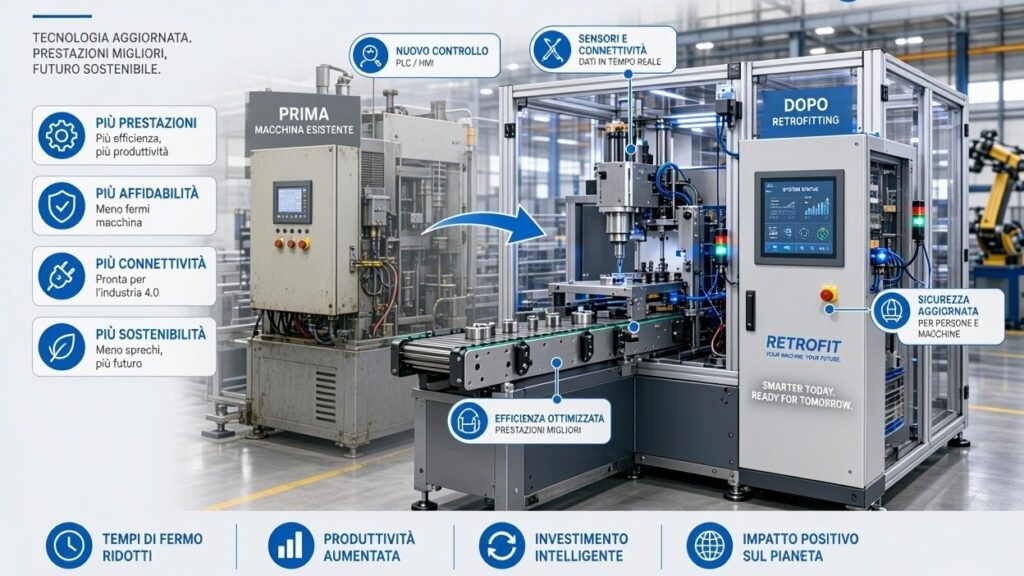
It involves targeted interventions on the parts of a machine that limit its performance, while retaining the components that are already working well. We can focus on three key areas:

⚙️Downtime: Faster format changes, optimized handling, and the elimination of bottlenecks along the production line.

🔧Reliability: Replacing components prone to wear, reinforcing critical parts, and implementing solutions that reduce recurring breakdowns.

📈 Productivity: Elevating the speed and stability of the machine cycle, building upon the equipment you already have in place.

Why it makes sense

  • A more modest investment compared to purchasing a new machine.
  • Shorter intervention times, with minimal impact on your production.
  • You retain the know-how for a machine your team is already familiar with.
  • Measurable results: fewer stoppages, higher output, and greater operational continuity.
  • How we work

    For over 30 years, based in Modena, we have been developing mechanical solutions for industrial automation and custom-built machinery for third parties.

    We always start by listening: what stops, when, and why? We then analyze the machine, identify the areas that need attention, and evaluate—together with you—whether and to what extent an upgrade is worthwhile. If the honest answer is “it’s not worth it,” we’ll tell you so.

And, as always, complete confidentiality regarding your equipment and processes is guaranteed.


💡 What machine in your factory stops most often?

Let’s discuss it during a no-obligation remote call: together, we can determine whether an upgrade could help you regain time and boost productivity.
Transition 5.0 is more than just a tax incentive. It is a way to rethink the efficiency of your machines.

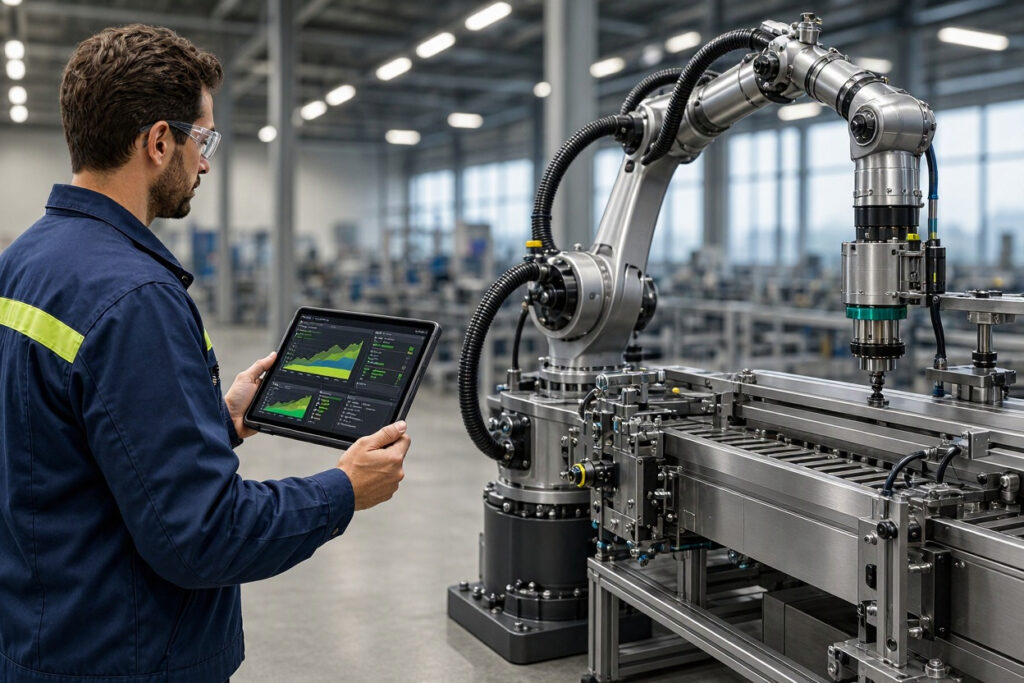
In the manufacturing sector, technical directors and plant managers are currently focused on a specific objective: integrating automation with measurable energy savings.

Industry 4.0 introduced interconnection and data digitalization. The “Transition 5.0” initiative raises the bar: it requires proof that innovation leads to a tangible reduction in energy consumption across production lines and the entire facility.

As of 2026, the tax credit model has been succeeded by a “hyper-depreciation” (super-amortization) scheme.

Our approach: result-oriented, data-driven solutions.

1️⃣ Targeted analysis and solutions: Feasibility studies backed by concrete evidence.

2️⃣ On-site integration: We work on both existing systems and new installations to optimize space, materials, motion paths, machine cycles, and start-up peak loads.

The bottom line:

With the right technology partner, a regulatory requirement can be transformed into a lasting reduction in your plant’s operating costs.

Please remember to always consult with your tax advisor regarding the specific requirements and procedures for accessing these incentives.
Ti ricordiamo di verificare sempre con il tuo consulente fiscale i requisiti e le modalità di accesso agli incentivi.


💡 Has your company already defined its strategy for Transition 5.0, or are you currently evaluating how to optimize energy consumption in your existing facilities?

Tell us about your situation—we’re here to listen, with no-obligation remote consultations available.